




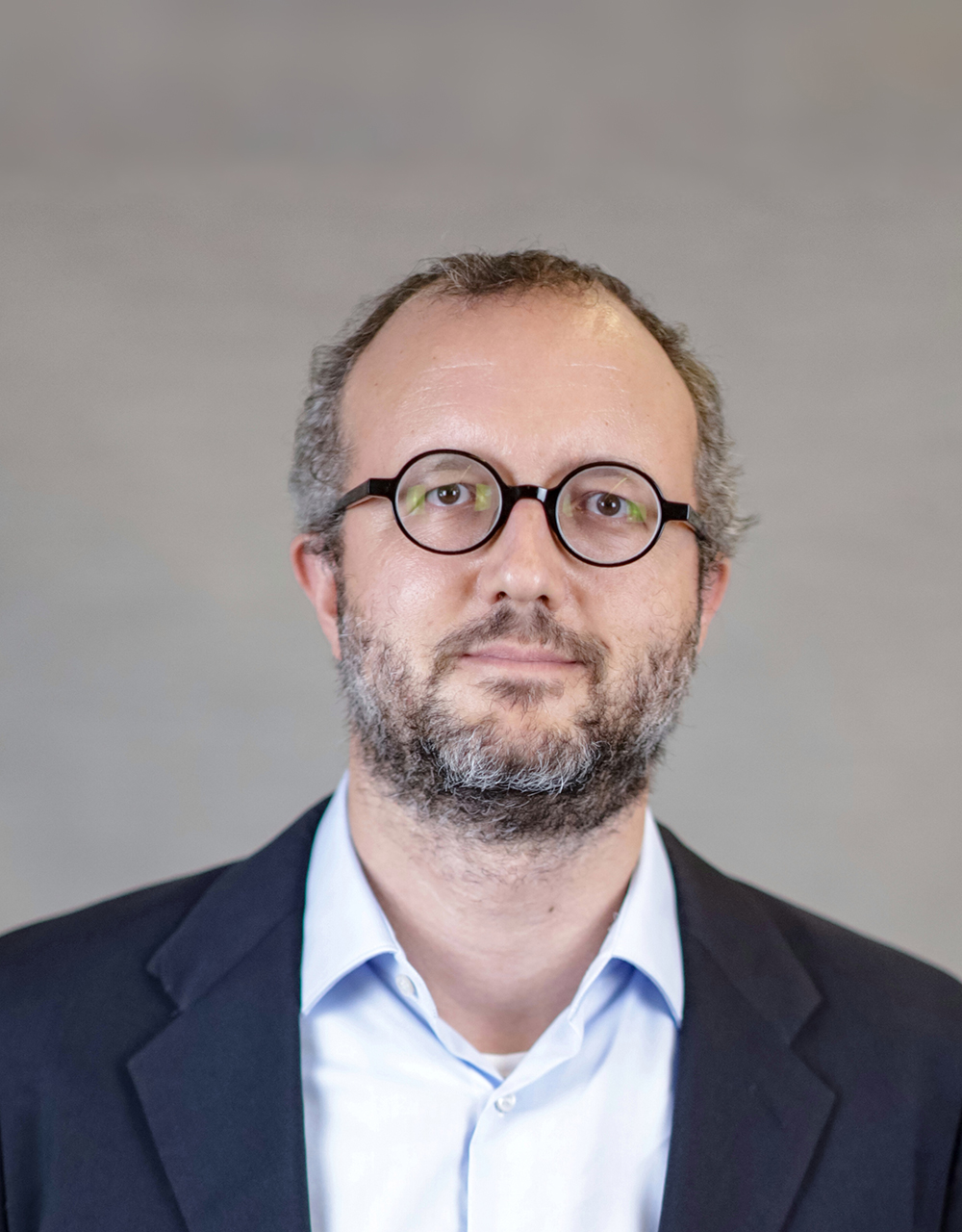
Marinos Kallikourdis read Natural Sciences at Trinity College, Cambridge (UK) under the supervision of M.S. Neuberger, where he also received a PhD in Immunology for work done in the MRC Laboratory of Molecular Biology (Cambridge, UK), home of the discovery of DNA structure and the invention of monoclonal and humanized antibodies. He was part of the team, led by A.G. Betz, that first demonstrated the requirement for regulatory T cells in the sustenance of maternal-fetal tolerance and deciphered the mechanism of pregnancy-associated amelioration of Rheumatoid Arthritis.
After a short post-doc with A. Viola, he became a Principal Investigator in Humanitas and Assistant Professor of General Pathology and Immunology in the Department of Medical Biotechnology and Translational Medicine, University of Milan. In 2015 he became Assistant and subsequently Associate Professor of General Pathology and Immunology at Humanitas University. His research group now focuses on cardio-immunology (See next sections).
Teaching
I formally commenced teaching as a college supervisor for Biochemistry at Trinity College, Cambridge, whilst studying for my PhD. In the collegiate supervision system, emphasis is given at stimulating the students’ ability to use their reasoning in order to ask and decipher complex scientific questions; this centuries-old principle remains a key guideline to how I approach lecturing.
As a faculty member of the University of Milan (2012-2015), I taught Adaptive Immunity modules in the english-language Medical School as well as in the Italian-language BSc and MSc Medical Biotechnology courses. I also ran an elective course, designed to expose students to the uncertain and often contradictory arrangement of information in the scientific literature.
In Humanitas University I teach modules on Adaptive Immunity and Immunopathology as part of an integrated course in the Medical Degree Course and the MEDTEC School Degree Course (in English), as well as in the Nursing MSc Course (in Italian). I also run an elective course on scientific communication.
Our lab aims to decipher the role of adaptive immunity in cardiovascular and metabolic diseases and tumor immunotherapy-induced cardiotoxicity, with the final goal of developing new therapeutic, diagnostic and prognostic strategies.
Our contributions in the last decade have helped shape the nascent field of T cell CardioImmunology, which promises to revolutionise cardiovascular and metabolic disease management and therapy.
For more details on our innovative work, click here.
- Martini E., Cremonesi M.*, Felicetta A.*, Serio S., Puccio S., Pelamatti E., van Beek J.J.P. , Papadopoulou V., Catalano C., Fanuele F., Giuliano D., Basso G., Bonfiglio C. A., Panico C., Carullo M. V. P., Papa L., D’Andrea C., Tuzger N., Marchini S., Magistroni P., Deaglio S., Amoroso A., Lugli E., Condorelli G., Kallikourdis M., (2025) Autoimmune-Like Mechanism in Heart Failure Enables Preventive Vaccine Therapy. Circulation Research 136(1):4-25
- Cremonesi M., Felicetta A., Cannata F., Serio S., van Beek J.J.P., Bombace S., My I., Zanon V., Catalano C., Papadopoulou V., Monti L., Chiarito M., Stefanini G., Panico C., Francone M., Lugli E., Kallikourdis M.* and Condorelli G.* (2023) Long COVID-19 cardiac complications are associated with autoimmunity to cardiac self-antigens sufficient to cause cardiac dysfunction Circulation. 148(6), 504-507
- Martini E., Giugliano S., Rescigno M., Kallikourdis M.*. (2020) Regulatory T Cells Beyond Autoimmunity: From Pregnancy to Cancer and Cardiovascular Disease. Front Immunol. 11:509.
- Kallikourdis M.*, Martini E., Carullo P., Sardi C., Roselli G., Greco C., Vignali D., Riva F., Ormbostad Berre AM., Stølen TO., Fumero A., Faggian G., Di Pasquale E., Elia L., Rumio C., Catalucci D., Papait R., Condorelli G.* (2017) T cell costimulation blockade blunts pressure overload-induced heart failure. Nat. Commun. 8, 14680
- Aluvihare V., Kallikourdis M. and Betz A. (2004) Regulatory T Cells Mediate Maternal Tolerance to the Fetus. Nat Immunol 5, 266-271
(*:co-senior, co-corresponding authors)