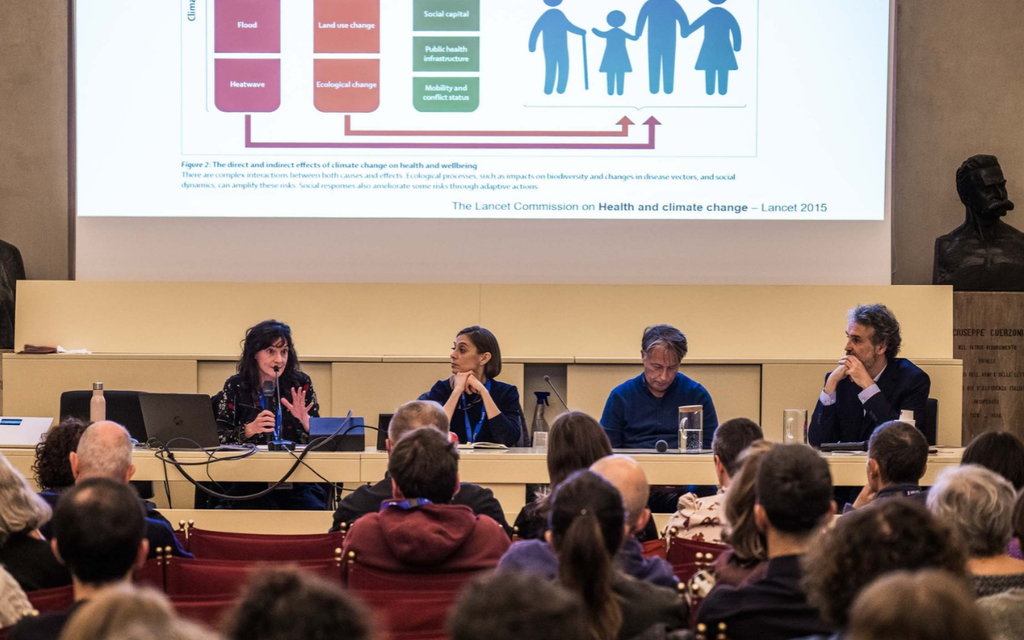
Once again this year, Humanitas University took part in CICAP Fest, the festival dedicated to science, curiosity and critical thinking, held in Padua from 6 to 8 November. Two talks that reaffirmed the University’s commitment to science communication and to fostering dialogue between the research community and the wider public.
What’s the next move? Assessing risks and making decisions under uncertainty
How do we make decisions when information is incomplete? This was the starting point for the talk by Davide Pozzi – Associate Professor of Pharmacology at Humanitas University and Head of the Developmental Neuroimmunology Unit at IRCCS Istituto Clinico Humanitas. His contribution explored how the brain works when faced with choices, whether instinctive or deliberate, and what scientific research and neuroscience can tell us about the mechanisms underlying our decision-making processes.
The discussion continued with chess player Marina Brunello, epidemiologist Gianluigi Ferrante and statistician Fulvio Ricceri, who examined decision-making under uncertainty from different perspectives: from strategic thinking in chess to the use of data and mathematical models to inform public health decisions.
The planet’s tipping points: why the climate crisis is our greatest health emergency
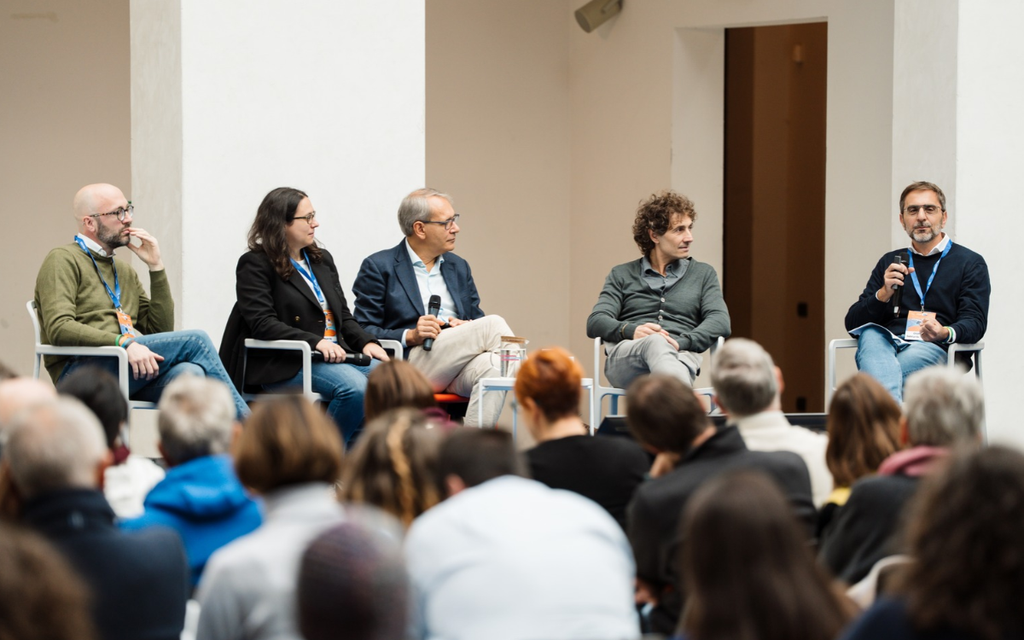
The climate crisis threatens not only the planet’s delicate balance but also has increasingly tangible consequences for human health. This was the perspective explored by Maura Marcucci – Associate Professor of Internal Medicine at Humanitas University and researcher at the Clinical Epidemiology and Research Center (CERC).
Together with climatologist Elisa Palazzi and bioethicist Luca Savarino, Marcucci explored the implications of climate tipping points: critical thresholds beyond which climate changes can become irreversible. While these changes unfold over time and are not always easy to detect, their effects on human health are already tangible. The heatwaves of recent summers and the resulting excess mortality highlight just how immediate and urgent the climate crisis has become, with its risks unevenly distributed across society and disproportionately affecting the most vulnerable groups.