Scientific research meets science communication at Focus Live 2026, a festival dedicated to science and innovation held at the National Museum of Science and Technology “Leonardo da Vinci” in Milan. Humanitas University took part in the event with three outstanding speakers, who explored some of the most pressing challenges in biomedical research: brain health, emerging technologies in medicine, and the relationship between the microbiota, lifestyle and cancer prevention.
Three different perspectives, united by a shared commitment to making complex scientific topics accessible to a wider audience and demonstrating how research can deepen our understanding of the human body and help develop solutions that increasingly meet patients’ needs.
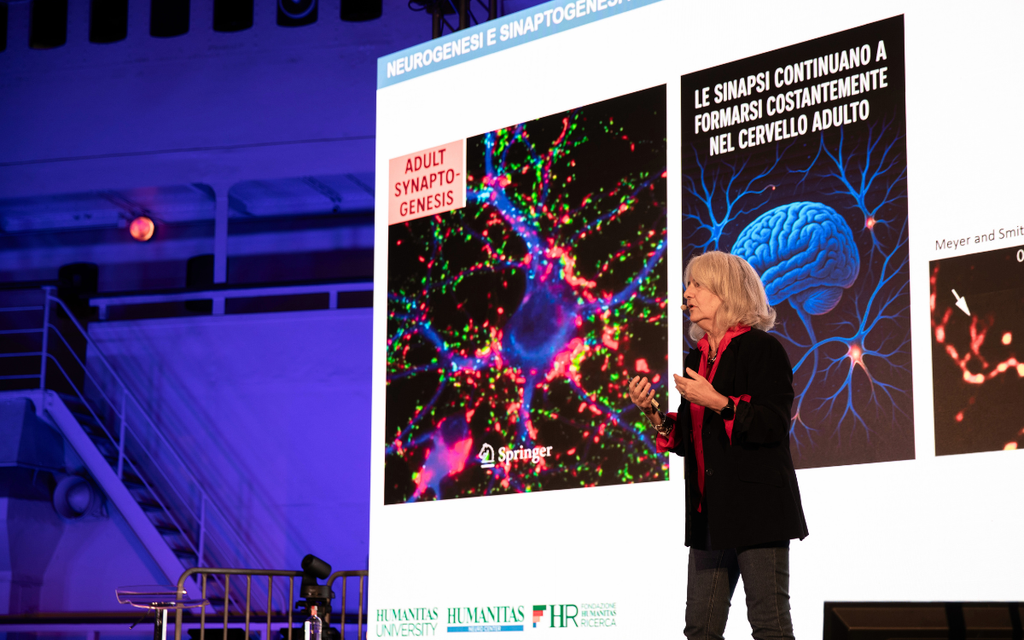
Growing brains: how to keep the mind active at every age
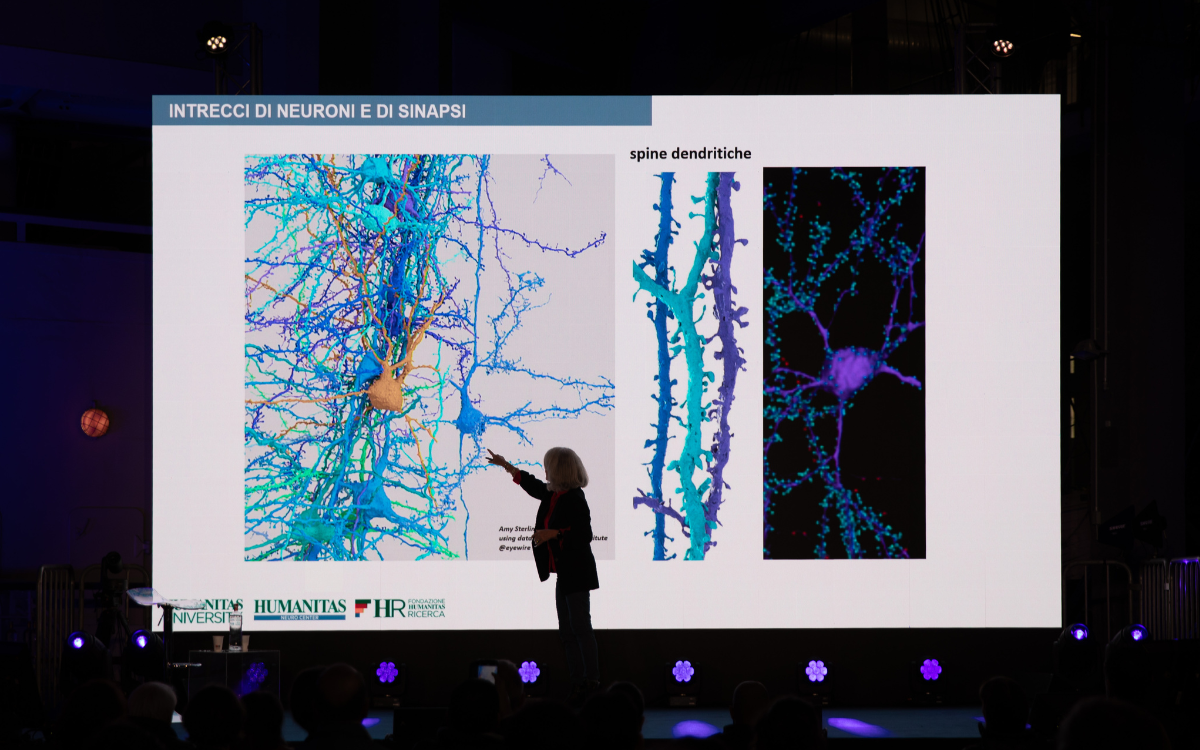
How does the brain change throughout our lives? And what habits can help keep it healthy? These were some of the questions explored in Growing Brains, a talk featuring Prof. Michela Matteoli – Professor of Pharmacology at Humanitas University and Director of the Neuroscience Programme at Humanitas Research Hospital.
Using the metaphor of the brain as a garden that needs nurturing, the talk explored brain plasticity, the nervous system’s ability to modify its connections in response to experiences, learning and environmental stimuli. This process continues into adulthood and helps keep the brain adaptable and active throughout life.
Physical activity, sleep, social relationships and curiosity are among the factors that contribute to cognitive well-being. Nutrition also plays an important role, with a focus on nutrients such as omega-3 fatty acids and certain vitamins, as well as the ongoing dialogue between the gut and the brain.
The result is a comprehensive perspective on brain health that brings together neuroscience research and everyday choices, highlighting the importance of taking care of our minds at every age.
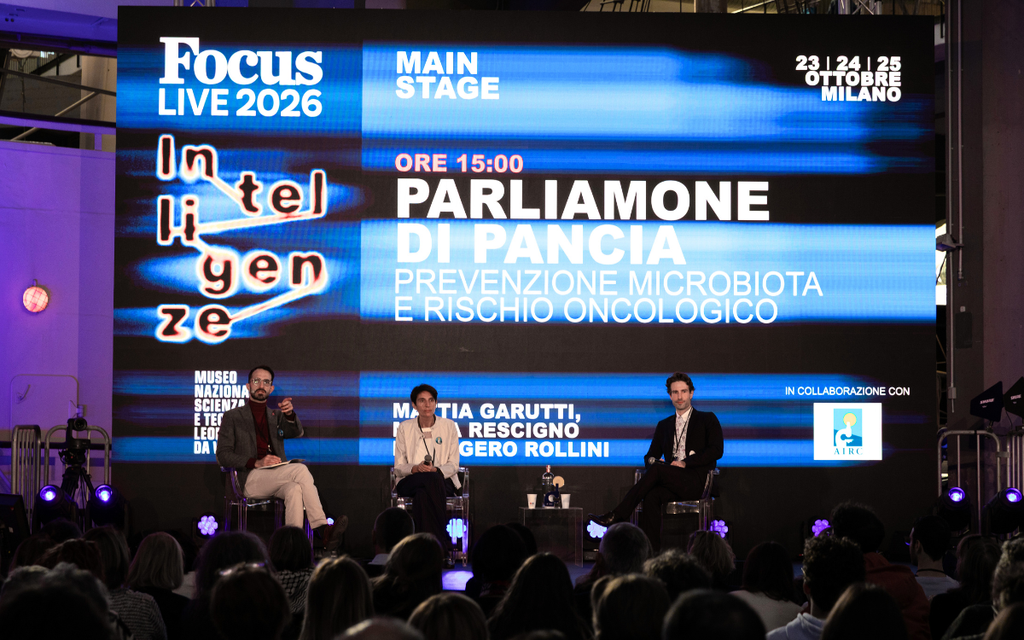
Let’s talk gut health: microbiota, lifestyle and cancer prevention
In the talk Let’s Talk Gut Health: Prevention, Microbiota and Cancer Risk, Prof. Maria Rescigno – Professor of General Pathology at Humanitas University and Scientific Director of CeMM in Vienna, joined Mattia Garutti, an oncologist specialising in nutrition and cancer genetics at the CRO National Cancer Institute in Aviano. The discussion was moderated by Ruggero Rollini, a chemist and science communicator. The event was held in collaboration with Fondazione AIRC.
The microbiota, the community of microorganisms that inhabit our bodies, is the focus of a growing body of research because of its involvement in physiological processes and its interactions with the immune system. Understanding these relationships may also help shed light on aspects of the connection between diet, lifestyle and the risk of developing certain diseases.
The discussion examined what research has already established and which questions remain unanswered, with particular attention to the role of nutrition and physical activity and their potential implications for cancer prevention.
It was an opportunity to distinguish established scientific evidence from hypotheses that require further investigation, reaffirming the importance of rigorous science communication when discussing health and prevention.
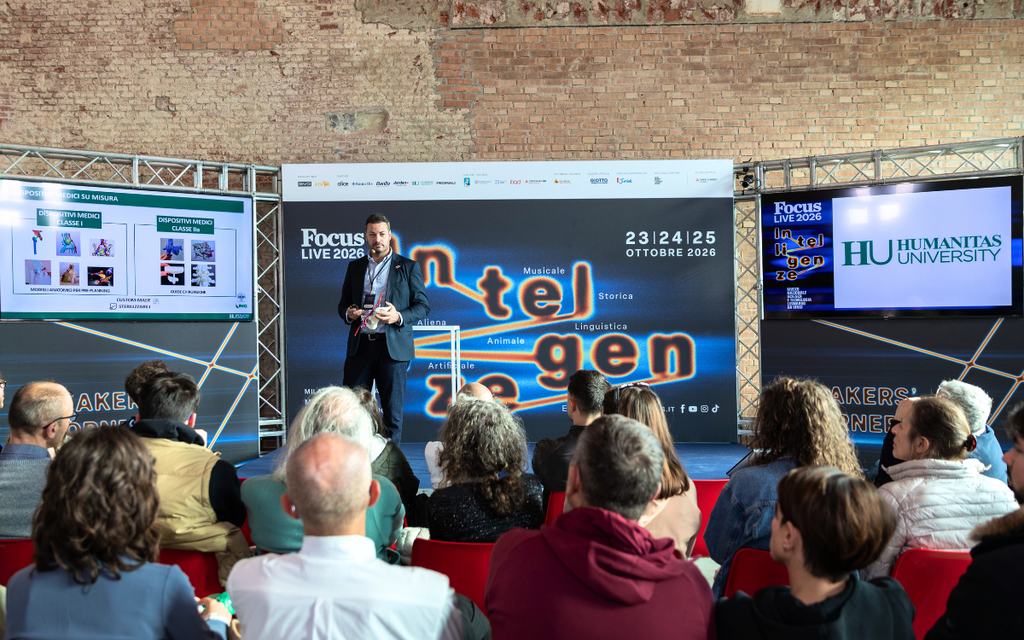
When Medicine Takes Shape: From 3D Printing to Personalised Care
From understanding biological mechanisms to developing new technological solutions, medical research increasingly relies on the ability to translate scientific knowledge into practical tools for clinical care.
This was the focus of When Medicine Takes Shape, a talk featuring Eng. Paolo Oliva – biomedical engineer, Head of Research Technology Management and Head of the 3D Innovation Lab at Humanitas University.
The talk explored how a clinical need can become the starting point for designing personalised solutions through collaboration between medicine, engineering, materials science and biomedical research.
Paolo Oliva discussed personalised medical devices, designed around the specific characteristics of individual patients; three-dimensional anatomical and pathological models, which make it possible to simulate procedures, plan surgeries and support healthcare professionals’ training; and the future of research in 3D bioprinting and biofabrication, technologies that enable the creation of three-dimensional biological structures and models to study tissues, diseases and potential therapeutic strategies.
These three distinct applications share a common goal: transforming data, images and biological information into practical tools that address specific clinical needs. They demonstrate how integrating expertise across different disciplines can help advance increasingly personalised medicine.
Research, innovation and science communication for human health
Humanitas University’s participation in Focus Live 2026 highlighted the diverse ways in which biomedical research contributes to medical progress: from investigating the mechanisms that regulate brain function to developing innovative technologies for patient care, and exploring the relationships between the microbiota, lifestyle and cancer risk.
Through the contributions of its faculty members and researchers, the university brought expertise and real-world research experience to the festival, demonstrating how interdisciplinary collaboration, scientific research and science communication are essential to bringing the public closer to the latest advances in medicine.