
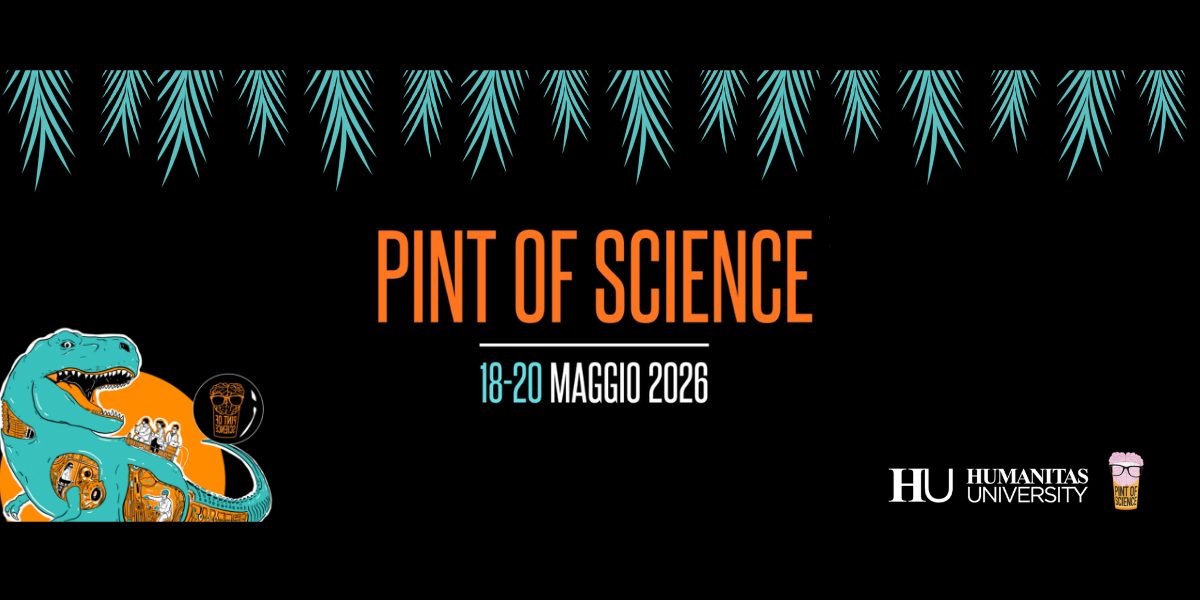
From May 18 to 20, pubs and venues across Milan once again became spaces where science and society could meet thanks to Pint of Science 2026, the international science communication festival that brings research out of laboratories and into everyday social spaces in a direct, accessible, and informal way.
Now in its eleventh Italian edition, the festival involved more than 90 pubs across 28 cities and over 300 researchers from universities and research centres throughout Italy. This year again, Humanitas University took part in the Milan programme with two events dedicated to neuroscience and cancer immunology, offering the public the chance to explore some of the most innovative frontiers in contemporary biomedical research.
Brain chaos and its neuroinflammatory origins
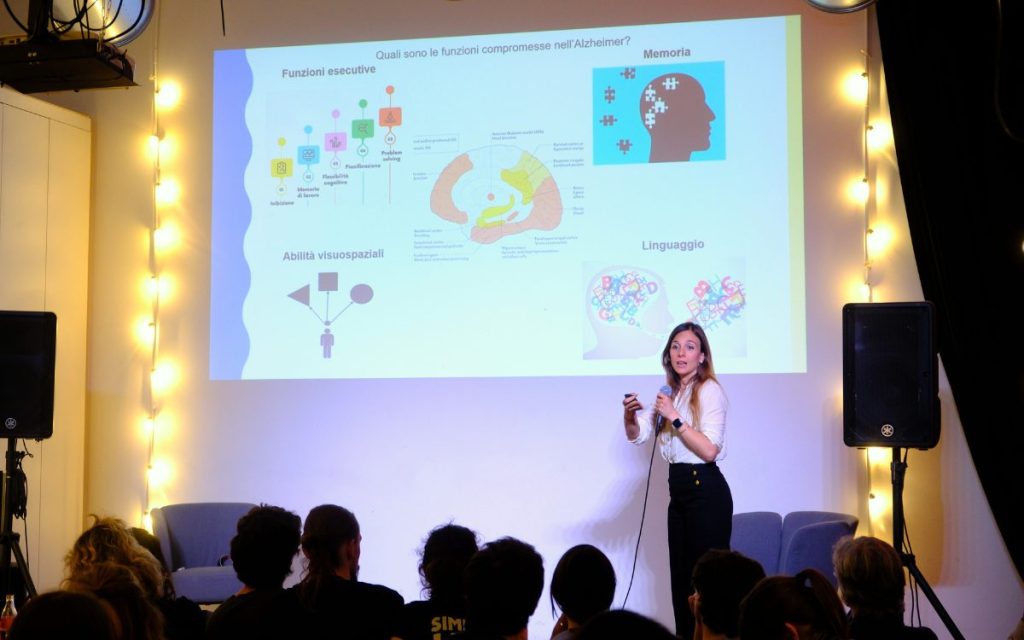
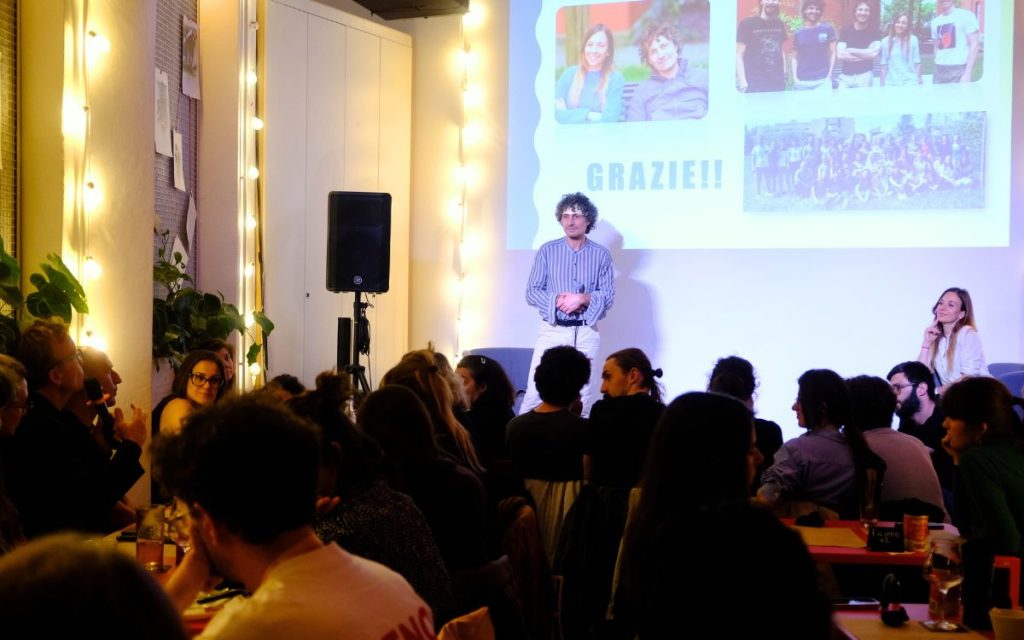
The first event, hosted at HUG Milano, explored the ongoing dialogue between the brain and the immune system.
During the evening, Davide Pozzi, Associate Professor at the Department of Biomedical Sciences at Humanitas University and Head of the Developmental Neuroimmunology Unit at Humanitas Research Hospital, together with Genni Desiato, who collaborates within the same Humanitas unit and is Researcher at the Institute of Neuroscience of the CNR, discussed how neuroimmunology is reshaping the way we understand brain function.
While the immune system was long considered simply the body’s defence mechanism, research now reveals a far more complex picture: immune molecules and cells actively influence cognitive functions, emotions, and synaptic plasticity.
Through examples and questions from the audience, the discussion explored the implications of this emerging paradigm for mental health and for understanding neurodegenerative and neuropsychiatric disorders, highlighting how the intersection between neuroscience and immunology is opening new directions in biomedical research.
May the (immune) force be with you, in the battle against cancer
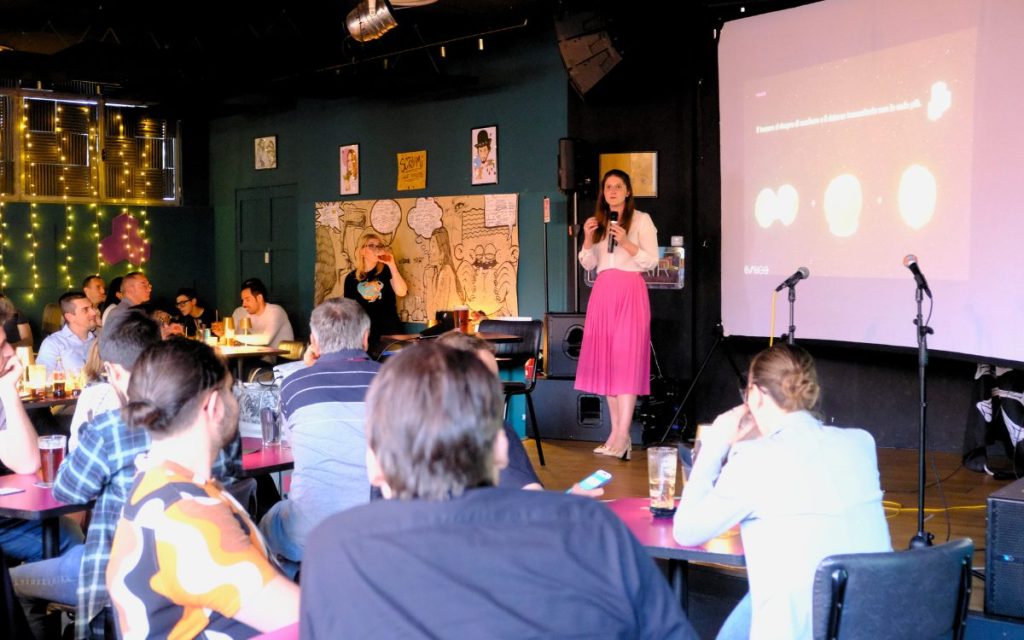
The second Humanitas event, hosted at Alibi Music & Spirits, focused on personalised immunotherapy and the new frontiers of precision medicine in oncology.
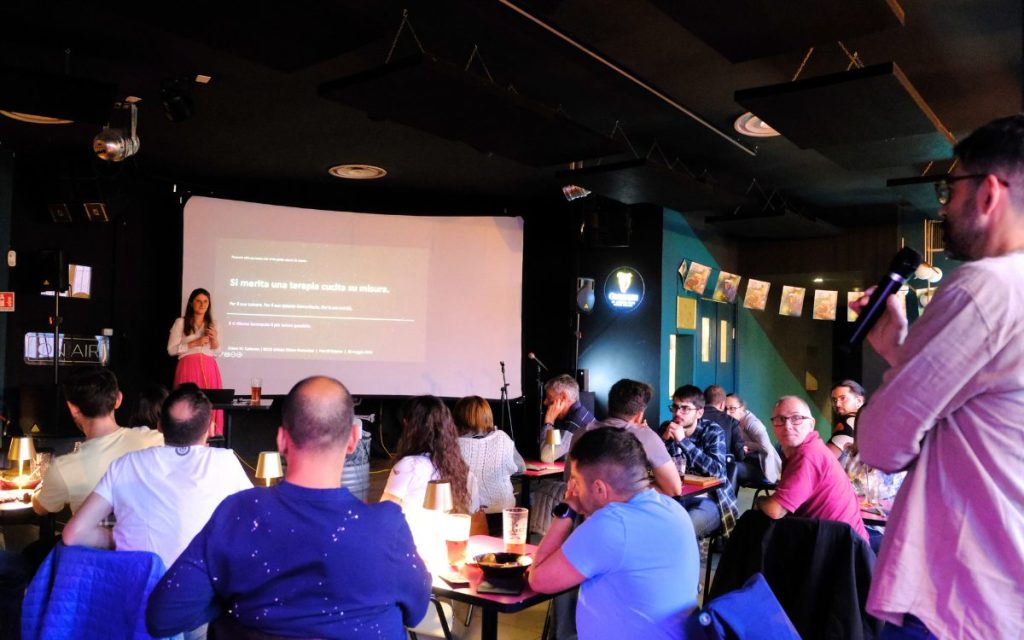
Leading the evening was Chiara Maria Cattaneo, Group Leader of the Precision Immuno-Oncology laboratory at Humanitas Research Hospital, who explained how researchers can now recreate a three-dimensional replica of a patient’s tumour in the laboratory to study its behaviour and train the patient’s own immune cells to recognise and attack it.
Starting from a simple question – “if every tumour is different, why should treatments all be the same?” – the talk showed how immunotherapy is evolving towards increasingly personalised approaches, tailored to the specific biological characteristics of each patient.
Between three-dimensional tumour models, “trained” immune cells and precision medicine, the evening offered a glimpse into therapies that would have sounded like science fiction just a few years ago and that today represent one of the most promising developments in cancer research.
Through its participation in Pint of Science 2026, Humanitas University renewed its commitment to science communication and public engagement, supporting opportunities where research can be shared beyond academic boundaries one conversation – and one pint – at a time.