




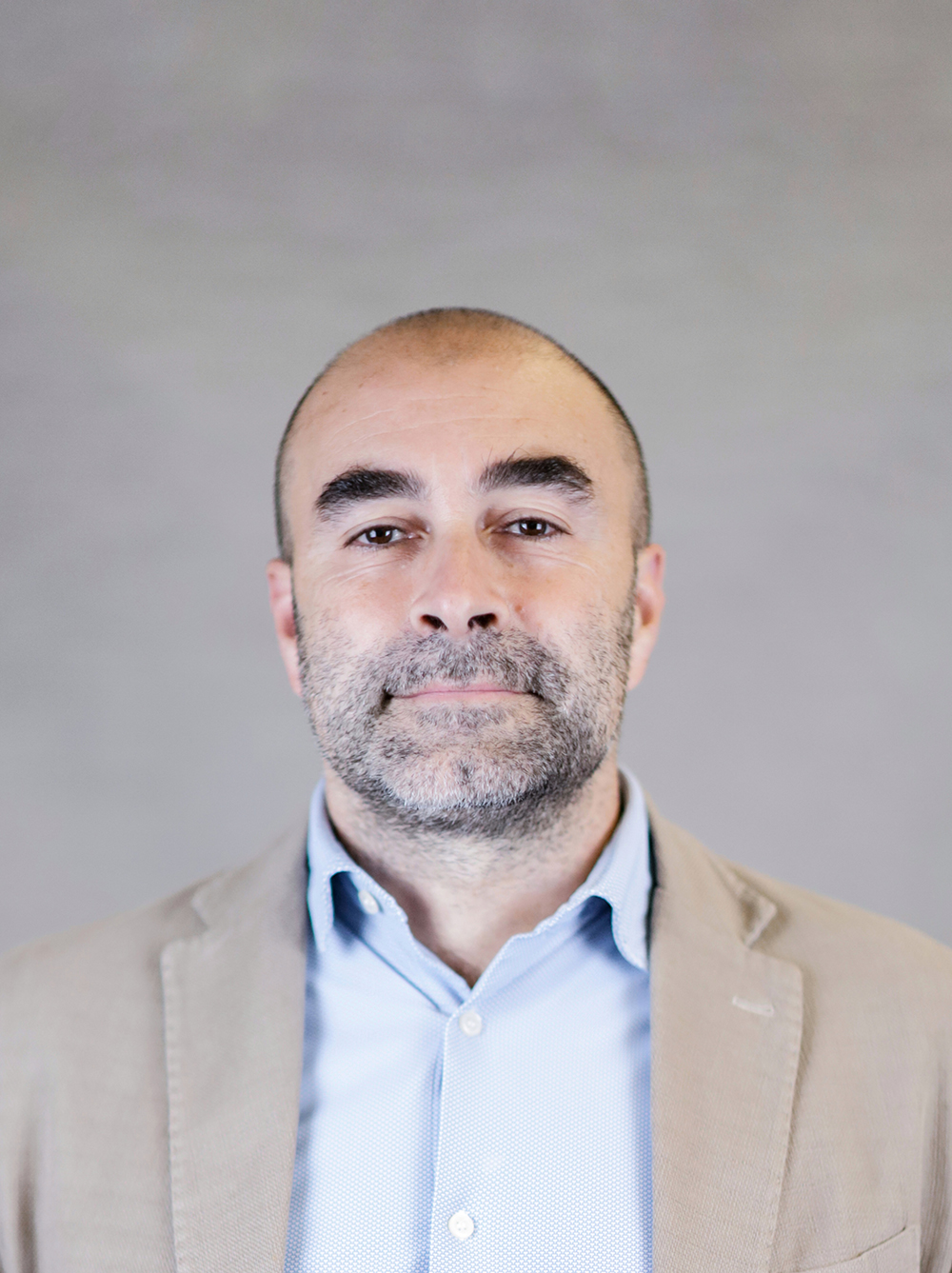
Roberto Rusconi earned a MS in Nuclear Engineering from the Polytechnic University of Milan and a PhD in Radiation Science and Technology working in the group of Prof. Roberto Piazza at the Polytechnic of Milan. His graduate research work focused on out-of-equilibrium phenomena in colloidal suspensions. In 2006, he was awarded a Roberto Rocca doctoral fellowship for a six-month research stay as visiting student at the Massachusetts Institute of Technology (MIT) to study the thermal properties of metal nanoparticle dispersions (also known as “nanofluids”) under the guide of Prof. Jacopo Buongiorno. From 2007 to 2010, he has been a postdoctoral fellow in the group of Prof. Howard Stone in the School of Engineering and Applied Sciences at Harvard University and from 2010 to 2015 in the group of Prof. Roman Stocker in the Department of Civil and Environmental Engineering at MIT. In 2016, he became a Senior Research Scientist in the Department of Civil, Environmental & Geomatic Engineering at ETH Zurich. Since September 2017, he is Associate Professor of Applied Physics in the Department of Biomedical Sciences at Humanitas University in Milan.
Biofilms are bacterial communities, generally associated with a surface or an interface and embedded in a matrix of self-secreted extracellular polymeric substances. Two major features of biofilms reflect their broad implications in industrial and clinical settings: the extreme difficulty of removing them from nearly every surface and their dramatically increased resistance (up to 1000-fold) to a wide range of antibiotics, relative to planktonic cells of the same species. The former property, for example, can reduce the efficiency and accelerate the corrosion of pipelines in water supply systems, causing equipment damage and the need for frequent and costly maintenance; the latter makes biofilms the most common cause of persistent and chronic infections. Roberto’s research combines microfluidics and mathematical modelling and is broadly aimed at understanding the formation of bacterial biofilms in response to environmental conditions, including physical forces and chemical cues. Other areas of interest include the fluid mechanics of microorganisms and biological systems, the physics of active suspensions, and the development of novel microfluidic tools for ecological and biomedical applications.
- Pellegrino L, Savorana G, Cassina V, Campanile R, Centola M, BelgiovineC, Vinci V, Klinger M, Lecuyer S, D’Imprima E, Mantegazza F, Secchi E, Rusconi R. Reduction of bacterial colonization on buckling-inducedwrinkled surfaces under fluid shear. Nature Communications 17:1324 (2026).
- Lauta FC, Pellegrino L, Rusconi R. Macrophages on the wrinkle: Exploring microscale interactions with substrate topography. Biophysics Reviews 5:022001 (2024).
- Vinci V, Belgiovine C, Janszen G, Agnelli B, Pellegrino L, Calcaterra F, Cancellara A, Ciceri R, Benedetti A, Cardenas C, Colombo F, Supino D,Lozito A, Caimi E, Monari M, Klinger FM, Riccipetitoni G, Raffaele A,Comoli P, Allavena P, Mavilio D, Di Landro L, Klinger M, Rusconi R. Breast implant surface topography triggers a chronic-like inflammatoryresponse. Life Science Alliance 7:e202302132 (2024).
- Secchi E, Savorana G, Vitale A, Eberl L, Stocker R, Rusconi R. The structural role of bacterial eDNA in the formation of biofilm streamers. Proceedings of the National Academy of Sciences of the United States of America119:e2113723119 (2022).
- Caldara M, Belgiovine C, Secchi E, Rusconi R. Environmental, Microbiological, and Immunological Features of Bacterial Biofilms Associated with Implanted Medical Devices. Clinical Microbiology Reviews35:e00221–20 (2022).